
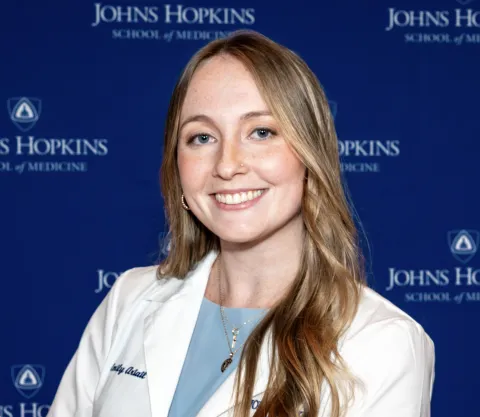
Scholar Spotlight: Emily Ariail
Emily Ariail – McNichols Foundation Scholar
1st Year Scholar, PhD candidate
Biomedical Engineering
Johns Hopkins University
Research:
My research utilizes cutting-edge technology at the interface of molecular engineering and immunology to engineer novel cytokine/antibody fusion proteins that aim to improve and expand the accessibility of cell-based cancer immunotherapies.
How Will Your Research Benefit Society?
Cancer remains one of the leading causes of death world-wide and creates an enormous burden on global healthcare. Adoptive T cell immunotherapies, such as chimeric antigen receptor (CAR) and T cell receptor (TCR) therapies, have revolutionized the field of cancer immunotherapy and demonstrated impressive clinical success as treatments for blood cancers, such as leukemias and lymphomas. Based upon this success, scientists are researching adoptive T cell therapies (ACTs) as treatments for additional types of cancer as well as other illnesses, such as autoimmune diseases and chronic infections. Our innovative bioengineering approach aims to directly regulate T cell function on the molecular level by developing and pre-clinically evaluating a novel interleukin-7 (IL-7) biologic. Successful completion of this project will improve patient quality of life and help reduce the burden of cancer on society.
How will an ARCS Award Benefit Your Research?
Receiving support from the ARCS Chapter Scholar Award would be invaluable as I continue the rapid progress of my thesis project and strive towards my long-term goals. This award would enable me to focus entirely on my dissertation work and educational milestones without worrying about research-associated costs. Furthermore, receiving this award would give me the flexibility to explore additional translational applications for my engineered cytokine therapeutic, such as a treatment for infectious diseases and sepsis. The ability to pursue additional research hypotheses would strengthen my project overall and amplify the broader impact of my work.
Career objectives:
After obtaining my PhD at Johns Hopkins, I plan to pursue a post-doctoral position at a translational biomedical research institution that allows me to work at the interface of structural biology and immune engineering to create novel therapeutics and develop new scientific skillsets. I aspire to one day become a professor and lead my own interdisciplinary research lab developing cutting-edge immunotherapies for cancer, autoimmunity, and infectious disease.
- Log in to post comments