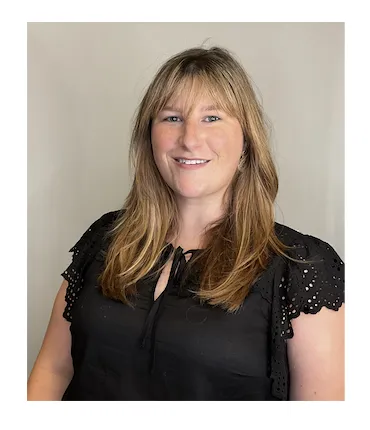
Scholar Spotlight: Kristan Morgan
Kristan Morgan – Mars Foundation Scholar
1st Year Scholar, PhD Candidate
Geography & Environmental Engineering
Johns Hopkins University
Research:
My research estimates CO2 sources and sinks in the Amazon, using NASA satellite data to model broader tropical South America to understand the environmental levers and knobs that control the contemporary tropical carbon cycle in one of Earth's most vulnerable environments.
How Will Your Research Benefit Society?
My passion for my field is fueled by the deep impacts the science has on society and the future of the Earth’s climate. If the Amazon rainforest, a massive carbon sink, continues to deforest at current rates and releases terrestrial carbon as atmospheric carbon dioxide, the climate implications would be severe and global, changing nearly every aspect of our society. Outside of my Amazonian research, I participate in ensemble global modelling projects including the OCO-2 Modeling Intercomparison Project (MIP). Comprised of 14 modelling frameworks from across the world, including my own model, the OCO-2 MIP uses the latest greenhouse gas satellite data to provide ensemble estimates of CO2 sources and sinks for the years 2015-2024, effectively establishing our current understanding of carbon cycle science. I explain to my friends and family that the science in my field shapes society’s perspective on Earth’s climate, both current and future. Thus, the benefit of continued science in my field cannot be understated.
How will an ARCS Award Benefit Your Research?
Because I am employed at NASA GSFC concurrently with my PhD pursuits in Geography & Environmental Engineering, I do not receive a graduate stipend through Johns Hopkins. Being granted the ARCS Graduate Scholar Award would both accelerate and advance my young career. I require strong, often costly, technology that can “keep up” with the atmospheric models I run, requiring intense coding and analysis. I also love travelling to share my science at US conferences, but it is my dream to share my science abroad at the International Workshop on Greenhouse Gas Measurements from Space (IWGGMS). The funding opportunity to attend IWGGMS and network with my European colleagues and science heroes in-person would help me become more established in the field globally. Similarly, being afforded the opportunity to meet with a particular colleague in France, a project scientist for ESA’s MicroCarb, would transform my career as this upcoming satellite’s data will be crucial to assimilate in my atmospheric model to better constrain the Amazonian carbon cycle and advance my PhD.
Career objectives:
My passion is carbon cycle science, and everything I do in my young career is to enable me to become a leader in the next generation of carbon satellite meteorology. I've worked with incredible scientists and network with nearly the entire Orbiting Carbon Observatory-2/3 (OCO-2/3) community, the NASA satellite Missions I use in my research at Johns Hopkins. I find synergy with my NASA work and my education goals, working hard to earn my Master's and start my PhD both while working full-time, fueled by my unstoppable drive to advance my young career. My goal is to leverage my deep roots in NASA to secure a post-doctoral position with the European Space Agency (ESA) and continue my work modeling tropical South American with their upcoming Mission MicroCarb’s data. My ultimate career objective is to be a well-respected scientist in the carbon science group at Cooperative Institute for Research in the Atmosphere (CIRA) in Fort Collins, CO, where my personal science heroes are.
- Log in to post comments